


For years, sustainability reporting has relied on secondary datasets.
Industry averages usually derive from secondary data, such as studies or generic databases. These figures form the baseline for carbon accounting tools, life cycle assessments (LCAs), and value chain partner reports. However, it is critical to question the true representation of these numbers, as reliance on secondary data presents an increasing business risk.
The 30 second briefing:
- The reality: averages may be estimates based on old data from other brands' factories or worst-case values.
- The risk: using worst-case values can make your carbon footprint look 30-40% worse than it is (Nature, 2024).
- The shift: regulators now demand primary source data; facts collected directly from your specific partners.
- The takeaway: reporting based on worst-case secondary data exposes your business to unnecessary risk.

The limitations of secondary data
Most secondary data assumes every farm and factory in a country is identical. But production is not uniform.
For example, using the ReCiPe 2016 midpoint methodology, 1 kilogram of cotton in India is calculated at 1.9 kilograms of CO₂. However, research shows that around 66% of cotton’s carbon footprint comes from nitrogen fertiliser (Yu & Yang, 2025). This means that if your value chain partner optimises their fertiliser use or applies regenerative practices, emissions can drop by 37%. Yet, secondary data fails to capture this specific efficiencies and forces you to report a generic worst-case scenario.
The shift from secondary data to primary source data
For years, secondary data was tolerated because value chain visibility was limited. That excuse no longer applies. Upcoming regulations like the Digital Product Passport (DPP) require product-level data linked to primary source data. You cannot defend a green claim with averages coming from secondary data, and you cannot improve what you are not accurately measuring.
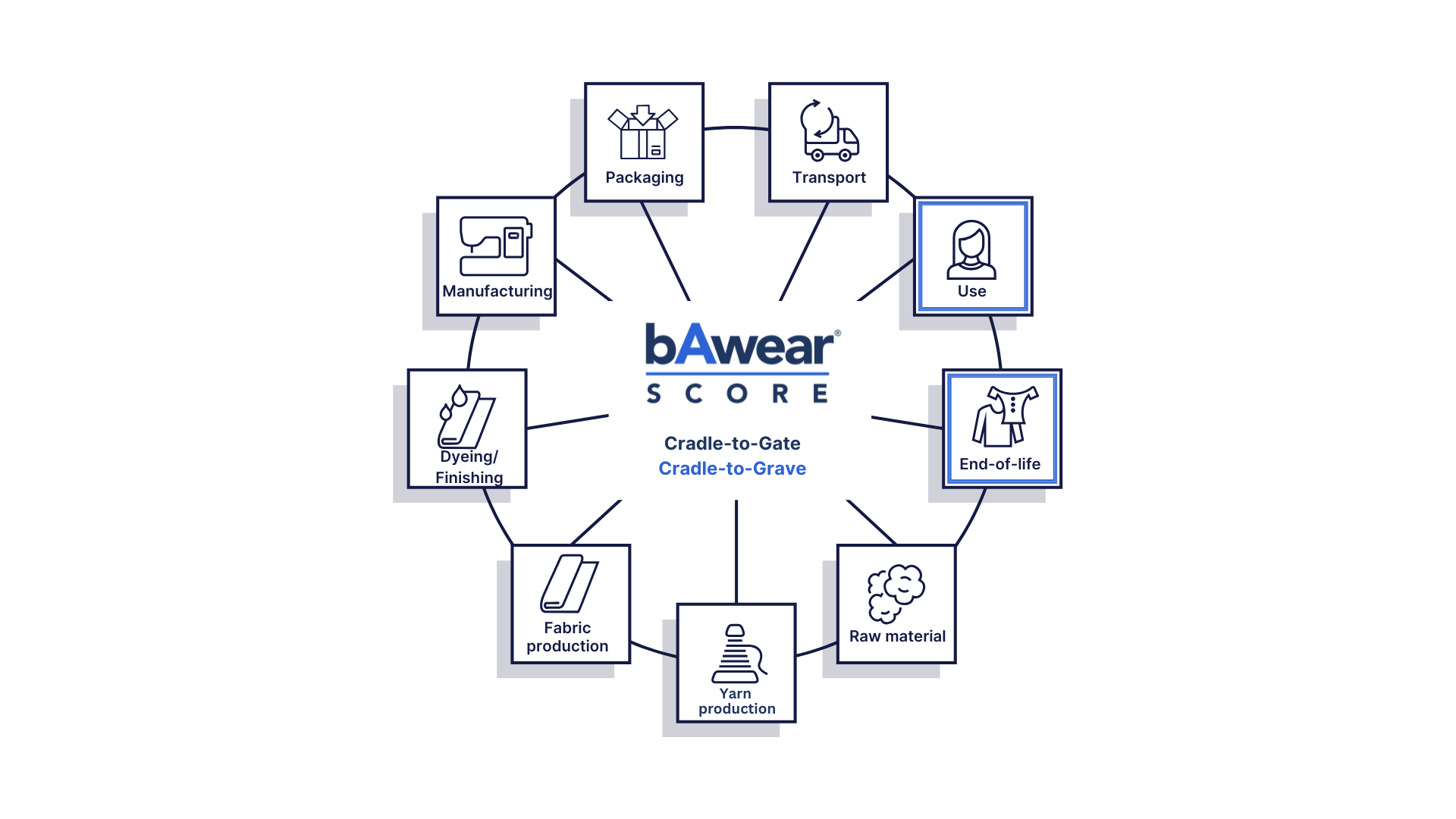
Through our partnership with bAwear, we help you replace worst-case secondary data with authentication:
- Transparency: we collect primary source data directly from your partners across the value chain.
- Calculate: bAwear models this data using the ReCiPe 2016 Midpoint methodology for scientific accuracy.
Secondary data shows what usually happens. Authenticated primary data proves what actually happens in your value chain.
Why this matters for your business
As the EU moves toward mandatory Corporate Sustainability Due Diligence (CSDD), regulators expect data traced back to real sources.
Secondary data were never designed for:
- Regulatory transparency: like the Digital Product Passport (DPP).
- Authenticated reporting: proving your claims to a regulator.
- Operational improvement: identifying hotspots to reduce environmental impact.
.jpg)
The bottom line
When you move to authenticated primary source data, your value chain becomes:
- Accurate: leading to better reporting.
- Defensible: lowering your greenwashing risk.
- Valuable: creating a stronger brand and better margins.
Industry averages were a starting point, but authenticated primary source data is the future.
Ready to future-proof your business? Book a 15-minute demo with us to see how we can help you move beyond averages and turn your data into your most valuable asset.

.png)
